Plate Heat Exchangers

Plate Heat Exchanger

Back to Products

Technical Principles

Plate Heat Exchangers (PHE) are among the most efficient thermal solutions in modern industry.By utilizing a series of corrugated metal plates to create turbulent flow patterns even at low velocities, these exchangers maximize the overall heat transfer coefficient (K). Every design is a result of precise fluid dynamic modeling intended to meet process performance requirements within the most compact physical envelope possible.
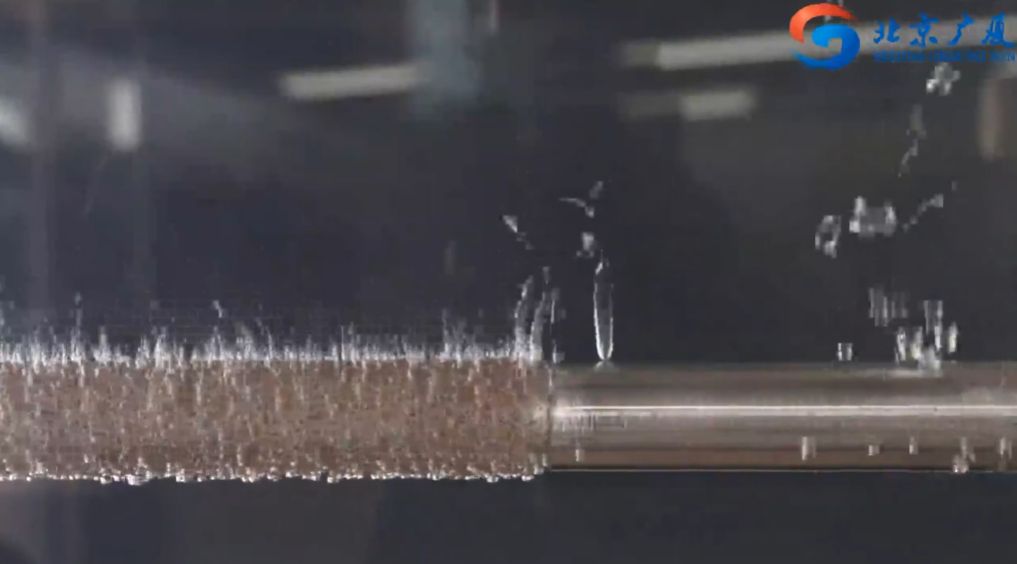
During the Boiling Process

Performance Advantages

Bespoke Process Engineering: Every unit is uniquely configured. By ing specific plate patterns, channel geometries, and materials, we ensure the final design strictly meets process performance requirements, achieving the perfect balance between thermal load and pressure .
Superior Thermal Efficiency: The corrugated plate design induces turbulence at low Reynolds numbers, delivering significantly higher $K$-values than conventional designs. This allows for operation at extremely close temperature approaches, maximizing energy recovery and lowering operational energy costs.
Extreme Compactness: Due to the high surface area-to-volume ratio, our PHEs typically require only 20% to 30% of the footprint of a shell and tube exchanger for the same duty. This is a critical advantage for space-constrained retrofits and modular offshore installations.
Flexibility & Maintainability: * Scalability: The modular frame design allows for easy capacity adjustments by adding or removing plates.
- Easy Maintenance: The units are easily disassembled for thorough cleaning and inspection, with high turbulence levels naturally mitigating fouling rates.
Global Standards & Advanced Metallurgy: Fully compliant with international codes such as ASME, PED, API 662, and GB/T 16409. We offer a wide array of plate materials—including Stainless Steel, Titanium, and Nickel Alloys—to ensure long-term durability in diverse chemical environments.

Typical Applications

Core Industries: Oil & Gas, Refining, Petrochemical, Chemical, Power, Food & Pharma, LNG, Steel, Green Energy, and Nuclear.

Process Versatility: Ideal for liquid-to-liquid exchange, condensation, and the processing of heat-sensitive media.

System Integration: From utility cooling systems to high-precision heat recovery stages within complex industrial cycles.
